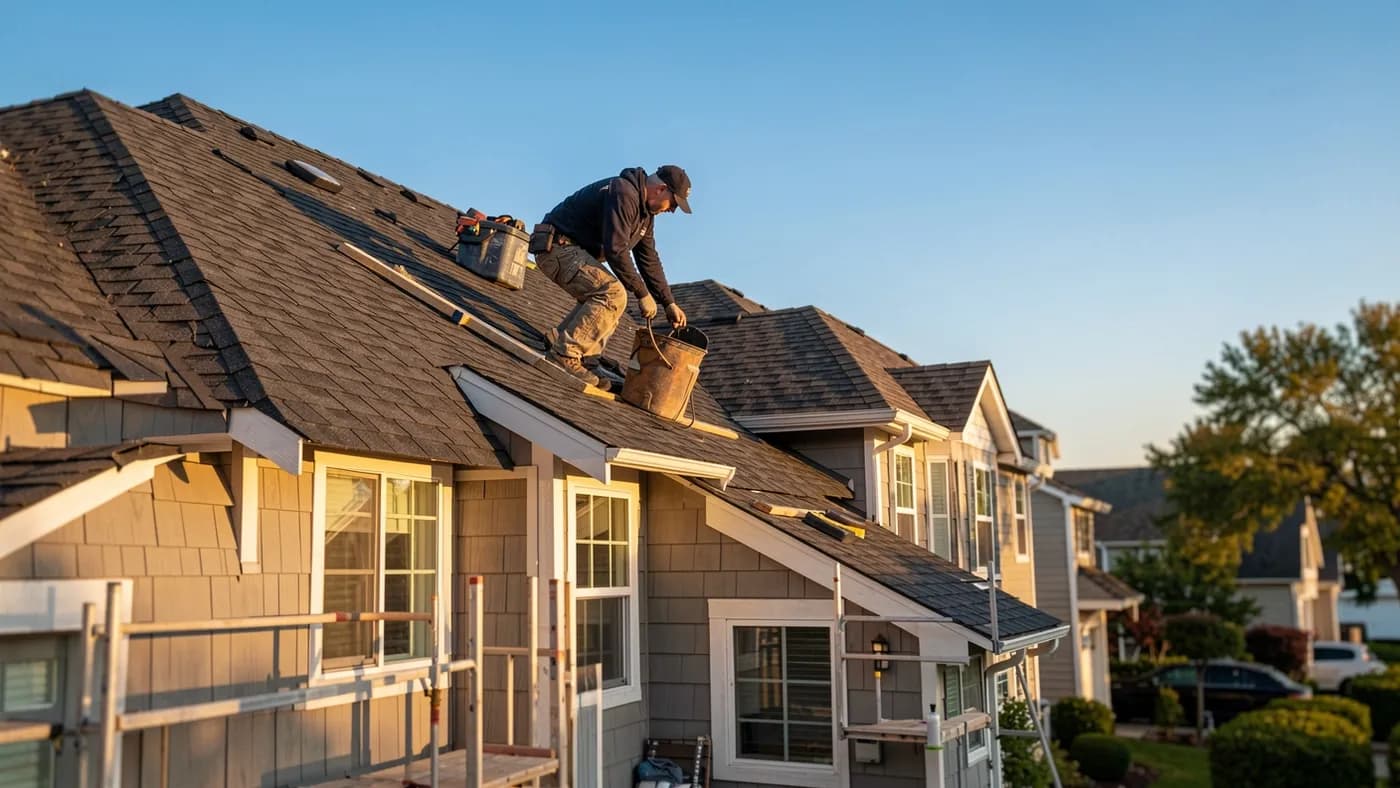
Roofing is one of the most competitive local searches in home services. A single replacement job can be worth more than many other trades earn in a month, so every roofer in town wants the same handful of spots at the top of Google. The good news: most of your competitors are doing SEO badly, or not at all. A focused, consistent approach beats a big budget spent in the wrong places.
This guide walks through exactly what we'd do for a roofing company starting from scratch, in the order we'd do it.
How Google Decides Which Roofers to Show
When someone searches "roof repair near me" or "roofer in Dallas," Google shows two kinds of results: the map pack (the three businesses with a map) and the regular organic results underneath. The map pack gets the lion's share of calls, so it's where most roofing SEO effort should start.
Google's own documentation says local results are based primarily on three factors:
- 1
Relevance
How well your business profile and website match what the person searched for. If you never mention storm damage, you won't show for storm damage searches.
- 2
Distance
How close your business is to the searcher or to the location in their search. You can't move your office, but you can make your service area clear.
- 3
Prominence
How well known your business is, online and off. Google says reviews, links, and mentions across the web all feed into this.
Distance is mostly out of your hands. Relevance and prominence are not, and that's where everything below comes in.
Step 1: Build a Google Business Profile That Wins Calls
Your Google Business Profile (GBP) is the single most important asset in local roofing SEO. Treat it like a second homepage.
GBP setup checklist for roofers
- Primary category set to Roofing contractor
- Secondary categories only where they're true (e.g. Gutter service)
- Every service you offer listed, with a short description
- Service area set to the cities you genuinely cover
- Real photos of your crew, trucks, and finished roofs
- Business hours, including emergency availability
- Booking or quote link pointing to a matching landing page
- A new post every week or two (projects, seasonal tips, offers)
Two details roofers often miss. First, your business name should be your real business name. Stuffing keywords into it ("Best Roofing Dallas Roof Repair") breaks Google's guidelines and can get your profile suspended. Second, answer the questions in the Q&A section yourself before strangers do.
Photos sell the job
Homeowners want to see work that looks like their house. Upload before-and-after photos with a short caption naming the service and neighborhood. It helps relevance and conversions at the same time.
Step 2: One Page per Service, One Page per Core City
The most common roofing website mistake is a single "Services" page that lists everything. Google can't tell which search that page should rank for, and a homeowner with a leaking roof doesn't want to scroll past gutter cleaning to find repair.
Instead, give each service its own page:
Roof repair
- Who it's for
- Leaks, missing shingles, small damage
- What it must include
- Response time, common repairs, typical price range, call button
Roof replacement
- Who it's for
- Old or failing roofs
- What it must include
- Materials you install, process, timeline, financing, warranties
Storm and hail damage
- Who it's for
- Insurance claims after weather
- What it must include
- How you help with insurance, inspection offer, before-and-after photos
Commercial roofing
- Who it's for
- Property managers, businesses
- What it must include
- Roof systems you handle, maintenance plans, project examples
Roof inspection
- Who it's for
- Buyers, sellers, insurance
- What it must include
- What's checked, report sample, booking link
| Page | Who it's for | What it must include |
|---|---|---|
| Roof repair | Leaks, missing shingles, small damage | Response time, common repairs, typical price range, call button |
| Roof replacement | Old or failing roofs | Materials you install, process, timeline, financing, warranties |
| Storm and hail damage | Insurance claims after weather | How you help with insurance, inspection offer, before-and-after photos |
| Commercial roofing | Property managers, businesses | Roof systems you handle, maintenance plans, project examples |
| Roof inspection | Buyers, sellers, insurance | What's checked, report sample, booking link |
Then build city pages for the areas that bring you the most profitable jobs. A good city page isn't the service page with the town name swapped in. It shows projects you've completed there, local issues (hail season, older housing stock, HOA rules), and reviews from customers in that city.
Step 3: Make Reviews a System, Not a Hope
Reviews do double duty for roofers. Google uses review count and rating as part of prominence, and homeowners comparing three roofers will almost always call the one with more recent, detailed reviews.
83%
of consumers use Google to read reviews of local businesses
Source: BrightLocal Local Consumer Review Survey 2025
89%
expect business owners to respond to reviews, good and bad
Source: BrightLocal Local Consumer Review Survey 2025
3
core local ranking factors, per Google: relevance, distance, prominence
Source: Google Business Profile Help
Build reviews into the job itself:
- Ask in person at the final walk-through, when the customer is happiest.
- Follow up the same day with a text containing your direct review link.
- Make it easy: one tap, no login hunting.
- Reply to every review within a couple of days, mentioning the service and area naturally.
Never buy reviews or offer discounts in exchange for them. It breaks Google's policies and the risk isn't worth it.
Not sure where your roofing site is losing leads?
We'll review your Google profile, website, and reviews and send you the top three fixes, free.
Step 4: A Website Built to Turn Searches Into Calls
Ranking only matters if the visit turns into a call. Most roofing leads come from phones, often from someone standing in their driveway looking up at a damaged roof.
- Speed: pages should load in about two seconds on mobile. Compress photos, avoid heavy sliders, and use good hosting.
- Click-to-call everywhere: a sticky call button on mobile, and your number in the header.
- Clear next step: "Get a free inspection" beats a generic contact form.
- Trust signals near the top: license number, insurance, manufacturer certifications, warranty, and review rating.
- Structured data: add LocalBusiness (or RoofingContractor) schema with your name, address, phone, and service area, plus FAQ schema on pages that answer common questions.
Step 5: Earn Local Links and Mentions
Links from other local websites still help prominence. For roofers, the best ones come from real-world relationships:
- Manufacturer certification directories (if you're a certified installer)
- Local suppliers and partner trades (gutters, siding, solar)
- Chamber of commerce and trade association listings
- Sponsorships of local teams or events
- Local news coverage after storms, with helpful advice for homeowners
Keep your business name, address, and phone number identical everywhere it appears. Inconsistent details confuse both Google and AI assistants.
Step 6: Show Up in AI Search Too
More homeowners now ask ChatGPT, Gemini, or Google's AI Overviews questions like "how do I know if I need a new roof?" or "who are good roofers near me?" These systems pull from sites that answer questions clearly and from businesses with consistent, well-reviewed listings.
Answer the questions homeowners actually ask
Add short, direct answers to questions like "How long does a roof replacement take?" and "Will insurance cover hail damage?" on your service pages. The same content helps you rank, win featured snippets, and get cited by AI assistants. Our guide to AI SEO services covers this in depth.
How to Measure Roofing SEO Properly
Traffic is a vanity number on its own. What matters is booked inspections and signed jobs. Track:
- Calls and forms by source: use call tracking numbers on your website and GBP.
- Map pack visibility: check your position for key searches across your service area, not just from your office.
- Leads to jobs: note which leads became inspections and which became signed contracts.
- Cost per job: compare SEO against Local Services Ads and PPC so you know where to put your next dollar.
The Bottom Line
Roofing SEO isn't a trick or a one-time setup. It's a system: a strong Google Business Profile, focused service and city pages, a steady flow of genuine reviews, a fast site that converts, and clear answers that both Google and AI assistants can use. Do those consistently and you'll overtake competitors who are still relying on a single page and a handful of old reviews.
If you'd rather have a team handle it, our SEO services are built exactly for local service businesses like yours, and our PPC team can run Local Services Ads alongside it while SEO builds momentum. See how we approach the whole picture on our roofing marketing page.